

Your area, clearly
The towns and postcodes you cover, set out plainly, so the calls you get are from people you can reach.

Mobile mechanics, mobile tyre fitters and mobile diagnostics
Your workshop is the customer's driveway, so people need to know where you cover, what you fix and how to book you. A website answers all three before they ring.

Booked from the driveway
Where you cover, what you fix, and a simple way to book you, before anyone picks up the phone.
What you actually get, and why it matters.
The towns and postcodes you cover, set out plainly, so the calls you get are from people you can reach.
Servicing, brakes, diagnostics, batteries, whatever you do, with a rough price where you are happy to give one.
Customers send the car, the fault, the address and a time that suits. You call back ready to quote, not to ask twenty questions.
Built so Google understands where you work and what you do, with your number one tap away on a phone.
A mobile mechanic site like this: from £800, live in 2–4 weeks.
Comparing prices first? Read: How much does a website cost for a tradesperson in the UK?
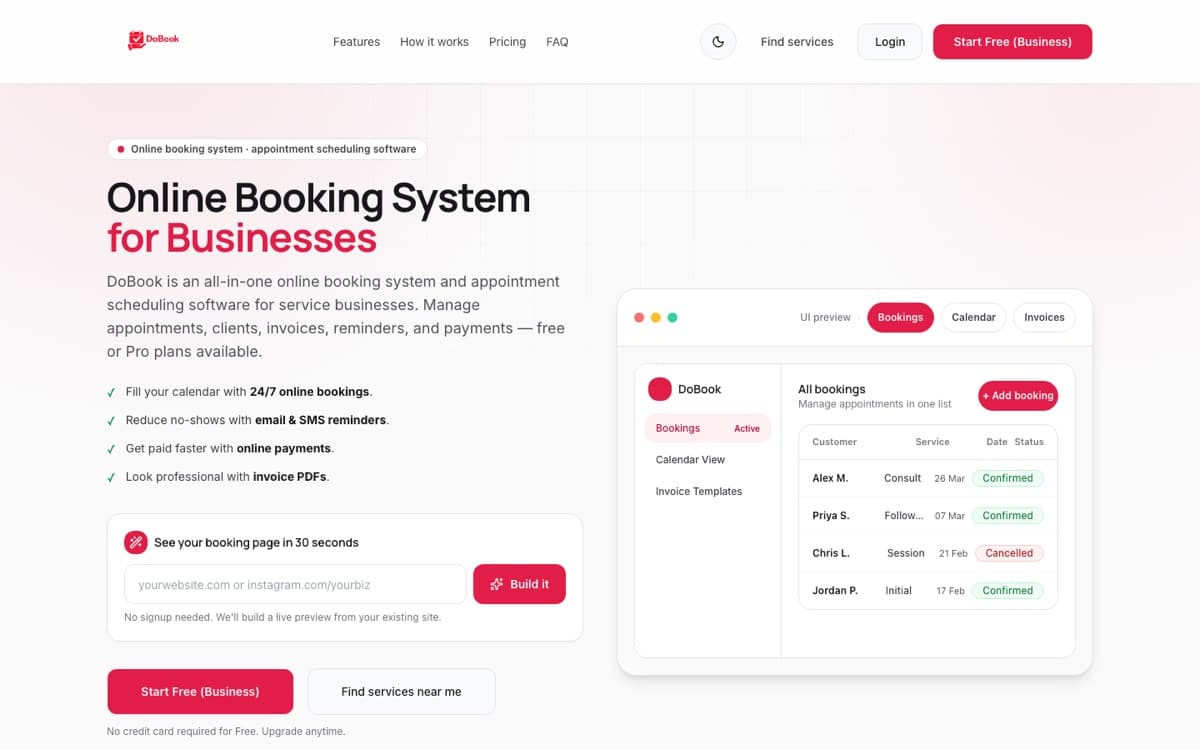
The closest work to a mobile mechanic site: the website for Crown Auto Trading, a car sales and repair workshop, and DoBook, a booking system. Both built for clients.

Client work
Car sales and repair workshop
Client work
Booking & scheduling SaaS
Either. Most mobile mechanics start with a request form, because you need to see the job before you commit to a time. Full online booking can be added later.
Yes, where each one has something real to say. A dozen near-identical town pages can do more harm than good with Google, so I will advise on which are worth it.
They help. Photos of you, your van and jobs you have done build trust faster than anything I can write. Phone photos are fine.
Tell me what you need and I'll send a fixed quote, usually within one working day.